Here's what nobody tells you about blockchain in production: the blockchain itself almost never fails. Ethereum keeps producing blocks. Bitcoin keeps running. The consensus mechanisms work exactly as designed.
Your application, however? That's a different story.
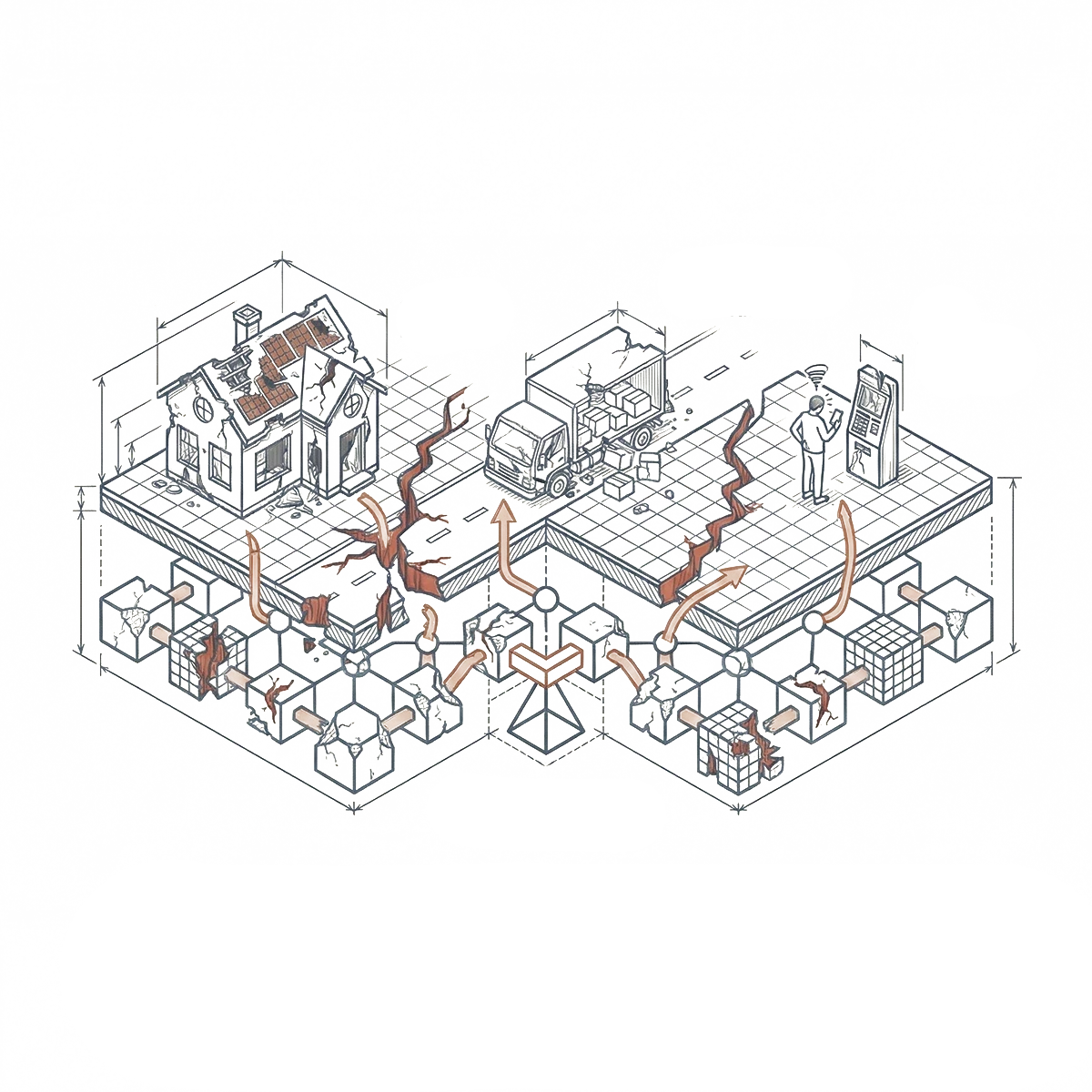
Most blockchain system failures have nothing to do with the blockchain. They're infrastructure failures, architecture mistakes, and operational oversights that become catastrophic when real users and real money are involved. Let's talk about how systems actually fail and how to prevent it before your 3 AM disaster.
Failure Mode #1: Single Point of Failure Infrastructure
How It Fails:
You're using a single RPC provider (Infura, Alchemy, whatever). They have an outage. Your entire application goes down instantly. Users can't connect wallets, can't make transactions, can't access their funds. Panic ensues.
Real Example:
Infura went down in November 2020. Hundreds of dApps became completely unusable simultaneously. MetaMask couldn't connect. Exchanges couldn't process deposits. The blockchain was running fine—the infrastructure layer failed.
Prevention:
const provider
= new ethers.providers.JsonRpcProvider(
"https://mainnet.infura.io/v3/YOUR-KEY"
);
const providers = [
new ethers.providers.JsonRpcProvider
("https://mainnet.infura.io/..."),
new ethers.providers.JsonRpcProvider
("https://eth-mainnet.alchemyapi.io/..."),
new ethers.providers.JsonRpcProvider
("https://cloudflare-eth.com")
];
async function callWithFallback(method, params) {
for (const provider of providers) {
try {
return await provider[method](...params);
} catch (error) {
continue;
}
}
throw new Error("All providers failed");
}
const provider
= new ethers.providers.JsonRpcProvider(
"https://mainnet.infura.io/v3/YOUR-KEY"
);
const providers = [
new ethers.providers.JsonRpcProvider
("https://mainnet.infura.io/..."),
new ethers.providers.JsonRpcProvider
("https://eth-mainnet.alchemyapi.io/..."),
new ethers.providers.JsonRpcProvider
("https://cloudflare-eth.com")
];
async function callWithFallback(method, params) {
for (const provider of providers) {
try {
return await provider[method](...params);
} catch (error) {
continue;
}
}
throw new Error("All providers failed");
}
const provider
= new ethers.providers.JsonRpcProvider(
"https://mainnet.infura.io/v3/YOUR-KEY"
);
const providers = [
new ethers.providers.JsonRpcProvider
("https://mainnet.infura.io/..."),
new ethers.providers.JsonRpcProvider
("https://eth-mainnet.alchemyapi.io/..."),
new ethers.providers.JsonRpcProvider
("https://cloudflare-eth.com")
];
async function callWithFallback(method, params) {
for (const provider of providers) {
try {
return await provider[method](...params);
} catch (error) {
continue;
}
}
throw new Error("All providers failed");
}The Fix: Use at least three RPC providers from different companies. Implement automatic failover. Monitor all endpoints. Never depend on a single infrastructure provider.
Failure Mode #2: Gas Price Death Spirals
How It Fails:
Your application hardcodes gas limits or doesn't handle gas price spikes. Network gets congested. Gas prices jump 10x-50x. Every transaction your users submit fails or costs hundreds of dollars. Your app becomes unusable.
Real Example:
During NFT mints or market crashes, gas prices regularly spike to 500+ gwei. Applications that don't handle this gracefully either fail completely or drain user wallets with failed transactions.
Prevention:
const tx = await contract.transfer(to, amount, {
gasLimit: 50000,
gasPrice: ethers.utils.parseUnits('20', 'gwei')
});
const gasPrice = await provider.getGasPrice();
const maxGasPrice
= ethers.utils.parseUnits('200', 'gwei');
if (gasPrice.gt(maxGasPrice)) {
throw new Error
('Gas price too high, try again later');
}
const tx = await contract.transfer(to, amount, {
gasLimit: estimatedGas.mul(120).div(100),
gasPrice: gasPrice
});
const tx = await contract.transfer(to, amount, {
gasLimit: 50000,
gasPrice: ethers.utils.parseUnits('20', 'gwei')
});
const gasPrice = await provider.getGasPrice();
const maxGasPrice
= ethers.utils.parseUnits('200', 'gwei');
if (gasPrice.gt(maxGasPrice)) {
throw new Error
('Gas price too high, try again later');
}
const tx = await contract.transfer(to, amount, {
gasLimit: estimatedGas.mul(120).div(100),
gasPrice: gasPrice
});
const tx = await contract.transfer(to, amount, {
gasLimit: 50000,
gasPrice: ethers.utils.parseUnits('20', 'gwei')
});
const gasPrice = await provider.getGasPrice();
const maxGasPrice
= ethers.utils.parseUnits('200', 'gwei');
if (gasPrice.gt(maxGasPrice)) {
throw new Error
('Gas price too high, try again later');
}
const tx = await contract.transfer(to, amount, {
gasLimit: estimatedGas.mul(120).div(100),
gasPrice: gasPrice
});The Fix: Always check current gas prices. Set maximum acceptable gas limits. Show users estimated costs before transactions. Provide options to queue transactions for later when gas is lower.
Failure Mode #3: Database and Indexer Lag
How It Fails:
Your application uses The Graph or custom indexers to query blockchain data. The indexer falls behind during high load. Users see stale data. Their recent transactions don't appear. Balances are wrong. Support tickets flood in.
Real Example:
The Graph subgraphs regularly fall behind during major events. Users panic when their NFT mint doesn't show up immediately. The transaction succeeded on-chain, but the indexer hasn't processed it yet.
Prevention:
const blockNumber = await provider.getBlockNumber();
const indexedBlock = await getLatestIndexedBlock();
const blocksBehind = blockNumber - indexedBlock;
if (blocksBehind > 100) {
showWarning
("Data may be delayed. Indexer is catching up.");
}
async function getUserBalance(address) {
const cachedBalance
= await getFromIndexer(address);
const onChainBalance
= await contract.balanceOf(address);
if (cachedBalance !== onChainBalance) {
console.warn("Indexer lag detected");
return onChainBalance;
}
return cachedBalance;
}
const blockNumber = await provider.getBlockNumber();
const indexedBlock = await getLatestIndexedBlock();
const blocksBehind = blockNumber - indexedBlock;
if (blocksBehind > 100) {
showWarning
("Data may be delayed. Indexer is catching up.");
}
async function getUserBalance(address) {
const cachedBalance
= await getFromIndexer(address);
const onChainBalance
= await contract.balanceOf(address);
if (cachedBalance !== onChainBalance) {
console.warn("Indexer lag detected");
return onChainBalance;
}
return cachedBalance;
}
const blockNumber = await provider.getBlockNumber();
const indexedBlock = await getLatestIndexedBlock();
const blocksBehind = blockNumber - indexedBlock;
if (blocksBehind > 100) {
showWarning
("Data may be delayed. Indexer is catching up.");
}
async function getUserBalance(address) {
const cachedBalance
= await getFromIndexer(address);
const onChainBalance
= await contract.balanceOf(address);
if (cachedBalance !== onChainBalance) {
console.warn("Indexer lag detected");
return onChainBalance;
}
return cachedBalance;
}The Fix: Monitor indexer lag. Show sync status to users. For critical operations, verify on-chain. Have fallback queries that work without indexers.
Failure Mode #4: Insufficient Error Handling
How It Fails:
A transaction reverts with a cryptic error. Your application crashes or shows "Transaction failed" with no context. Users don't know what went wrong or how to fix it. They blame your app, leave bad reviews, or worse—lose funds.
Real Example:
User tries to swap tokens but hasn't approved the contract. Transaction fails with "ERC20: transfer amount exceeds allowance." Your app shows generic error. User thinks the app is broken.
Prevention:
try {
await contract.swap(tokenA, tokenB, amount);
} catch (error) {
alert("Transaction failed");
}
try {
await contract.swap(tokenA, tokenB, amount);
} catch (error) {
if (error.message.includes("allowance")) {
showError(
"Please approve token spending first",
{ action: "Click here to approve",
handler: approveTokens }
);
} else if (error.message.includes("insufficient")) {
showError("Insufficient balance. You need "
+ requiredAmount);
} else if (error.code === 4001) {
showError("Transaction rejected by user");
} else {
showError("Transaction failed: " + error.reason, {
details: error.message,
txHash: error.transactionHash
});
}
}
try {
await contract.swap(tokenA, tokenB, amount);
} catch (error) {
alert("Transaction failed");
}
try {
await contract.swap(tokenA, tokenB, amount);
} catch (error) {
if (error.message.includes("allowance")) {
showError(
"Please approve token spending first",
{ action: "Click here to approve",
handler: approveTokens }
);
} else if (error.message.includes("insufficient")) {
showError("Insufficient balance. You need "
+ requiredAmount);
} else if (error.code === 4001) {
showError("Transaction rejected by user");
} else {
showError("Transaction failed: " + error.reason, {
details: error.message,
txHash: error.transactionHash
});
}
}
try {
await contract.swap(tokenA, tokenB, amount);
} catch (error) {
alert("Transaction failed");
}
try {
await contract.swap(tokenA, tokenB, amount);
} catch (error) {
if (error.message.includes("allowance")) {
showError(
"Please approve token spending first",
{ action: "Click here to approve",
handler: approveTokens }
);
} else if (error.message.includes("insufficient")) {
showError("Insufficient balance. You need "
+ requiredAmount);
} else if (error.code === 4001) {
showError("Transaction rejected by user");
} else {
showError("Transaction failed: " + error.reason, {
details: error.message,
txHash: error.transactionHash
});
}
}The Fix: Parse error messages. Provide actionable guidance. Show transaction hashes for debugging. Handle user rejections gracefully. Never show raw technical errors to end users.
Failure Mode #5: State Inconsistency Between On-Chain and Off-Chain
How It Fails:
Your database says one thing. The blockchain says another. Users see incorrect balances, duplicate items, or missing transactions. Trust evaporates instantly.
Real Example:
NFT marketplace shows an NFT as available. User tries to buy it. Transaction fails because someone already bought it 5 minutes ago, but the database hasn't updated.
Prevention:
async function purchaseNFT(tokenId) {
const listing = await db.getListing(tokenId);
if (listing.available) {
await contract.purchase(tokenId);
}
}
async function purchaseNFT(tokenId) {
const listing = await db.getListing(tokenId);
const owner = await contract.ownerOf(tokenId);
const isListed = await contract.isListed(tokenId);
if (!isListed || owner !== listing.seller) {
await db.markAsUnavailable(tokenId);
throw new Error("NFT no longer available");
}
await contract.purchase(tokenId);
}
async function reconcileState() {
const dbListings = await db.getAllListings();
for (const listing of dbListings) {
const onChainState
= await contract.getListing(listing.id);
if (dbState !== onChainState) {
await db.update(listing.id, onChainState);
logInconsistency(listing.id);
}
}
}
async function purchaseNFT(tokenId) {
const listing = await db.getListing(tokenId);
if (listing.available) {
await contract.purchase(tokenId);
}
}
async function purchaseNFT(tokenId) {
const listing = await db.getListing(tokenId);
const owner = await contract.ownerOf(tokenId);
const isListed = await contract.isListed(tokenId);
if (!isListed || owner !== listing.seller) {
await db.markAsUnavailable(tokenId);
throw new Error("NFT no longer available");
}
await contract.purchase(tokenId);
}
async function reconcileState() {
const dbListings = await db.getAllListings();
for (const listing of dbListings) {
const onChainState
= await contract.getListing(listing.id);
if (dbState !== onChainState) {
await db.update(listing.id, onChainState);
logInconsistency(listing.id);
}
}
}
async function purchaseNFT(tokenId) {
const listing = await db.getListing(tokenId);
if (listing.available) {
await contract.purchase(tokenId);
}
}
async function purchaseNFT(tokenId) {
const listing = await db.getListing(tokenId);
const owner = await contract.ownerOf(tokenId);
const isListed = await contract.isListed(tokenId);
if (!isListed || owner !== listing.seller) {
await db.markAsUnavailable(tokenId);
throw new Error("NFT no longer available");
}
await contract.purchase(tokenId);
}
async function reconcileState() {
const dbListings = await db.getAllListings();
for (const listing of dbListings) {
const onChainState
= await contract.getListing(listing.id);
if (dbState !== onChainState) {
await db.update(listing.id, onChainState);
logInconsistency(listing.id);
}
}
}The Fix: Blockchain is source of truth, always. Verify critical state on-chain before transactions. Run reconciliation jobs. Alert on inconsistencies. Design for eventual consistency.
Failure Mode #6: No Incident Response Plan
How It Fails:
Something breaks at 2 AM. Nobody knows who to call. Nobody has admin keys. Nobody can pause the contract. The exploit continues for hours while the team scrambles.
Real Example:
Multiple DeFi protocols have been drained because the team couldn't respond fast enough. No multisig signers available. No emergency pause function. No documented procedures.
Prevention:
Before Launch:
Deploy contracts with emergency pause functions
Use multisig with geographically distributed signers
Document emergency procedures step-by-step
Set up 24/7 monitoring with alerts
Have a war room communication channel ready
Practice incident response with drills
Monitoring Setup:
function monitorContract() {
contract.on("Transfer", (from, to, amount) => {
if (amount > LARGE_TRANSFER_THRESHOLD) {
alert.send("Large transfer detected",
{ from, to, amount });
}
});
setInterval(async () => {
const balance
= await provider.getBalance(contract.address);
if (balance.lt(MINIMUM_BALANCE)) {
alert.critical("Contract balance critically low");
}
}, 60000);
}
function monitorContract() {
contract.on("Transfer", (from, to, amount) => {
if (amount > LARGE_TRANSFER_THRESHOLD) {
alert.send("Large transfer detected",
{ from, to, amount });
}
});
setInterval(async () => {
const balance
= await provider.getBalance(contract.address);
if (balance.lt(MINIMUM_BALANCE)) {
alert.critical("Contract balance critically low");
}
}, 60000);
}
function monitorContract() {
contract.on("Transfer", (from, to, amount) => {
if (amount > LARGE_TRANSFER_THRESHOLD) {
alert.send("Large transfer detected",
{ from, to, amount });
}
});
setInterval(async () => {
const balance
= await provider.getBalance(contract.address);
if (balance.lt(MINIMUM_BALANCE)) {
alert.critical("Contract balance critically low");
}
}, 60000);
}The Fix: Plan for disasters before they happen. Have emergency procedures. Practice incident response. Make sure critical people are always reachable.
Failure Mode #7: Poor User Experience Leading to User Error
How It Fails:
Users make costly mistakes because your UI is confusing. They send funds to wrong addresses, approve unlimited token spending, or confirm malicious transactions because they don't understand what they're signing.
Real Example:
Users regularly lose funds by: sending tokens to contract addresses instead of recipient addresses, approving scam contracts for unlimited spending, sending on the wrong network (ETH to BSC address).
Prevention:
async function validateRecipient(address) {
if (!ethers.utils.isAddress(address)) {
throw new Error("Invalid address format");
}
const code = await provider.getCode(address);
if (code !== "0x") {
const warning = "This appears to be a contract address. Are you sure?";
const confirmed = await showConfirmation(warning);
if (!confirmed) return false;
}
if (await isKnownScam(address)) {
throw new Error("This address is flagged as a scam");
}
return true;
}
function showTransactionPreview(tx) {
return {
action: "Send 100 USDC",
to: "0x1234...5678 (verified recipient)",
network: "Ethereum Mainnet",
estimatedGas: "$5.23",
warning: "This action cannot be reversed"
};
}
async function validateRecipient(address) {
if (!ethers.utils.isAddress(address)) {
throw new Error("Invalid address format");
}
const code = await provider.getCode(address);
if (code !== "0x") {
const warning = "This appears to be a contract address. Are you sure?";
const confirmed = await showConfirmation(warning);
if (!confirmed) return false;
}
if (await isKnownScam(address)) {
throw new Error("This address is flagged as a scam");
}
return true;
}
function showTransactionPreview(tx) {
return {
action: "Send 100 USDC",
to: "0x1234...5678 (verified recipient)",
network: "Ethereum Mainnet",
estimatedGas: "$5.23",
warning: "This action cannot be reversed"
};
}
async function validateRecipient(address) {
if (!ethers.utils.isAddress(address)) {
throw new Error("Invalid address format");
}
const code = await provider.getCode(address);
if (code !== "0x") {
const warning = "This appears to be a contract address. Are you sure?";
const confirmed = await showConfirmation(warning);
if (!confirmed) return false;
}
if (await isKnownScam(address)) {
throw new Error("This address is flagged as a scam");
}
return true;
}
function showTransactionPreview(tx) {
return {
action: "Send 100 USDC",
to: "0x1234...5678 (verified recipient)",
network: "Ethereum Mainnet",
estimatedGas: "$5.23",
warning: "This action cannot be reversed"
};
}The Fix: Validate everything. Show clear transaction previews in plain language. Warn about common mistakes. Add confirmation steps for dangerous actions. Make it hard to lose funds by accident.
What Production-Ready Actually Means
At Base58, we've seen every failure mode in this article destroy projects. Our approach to building blockchain systems prioritizes resilience:
Infrastructure Redundancy: Multiple RPC providers, geographic distribution, automatic failover
Operational Monitoring: 24/7 alerting, anomaly detection, automated incident response
State Reconciliation: Continuous verification between on-chain and off-chain systems
Error Handling: User-friendly messages, actionable guidance, comprehensive logging
Incident Preparedness: Emergency procedures, multisig controls, practiced response plans
We build systems expecting failure because in production, failure is inevitable. The question isn't if something will break—it's whether you'll be ready when it does.
Let's build something that works in the real world.